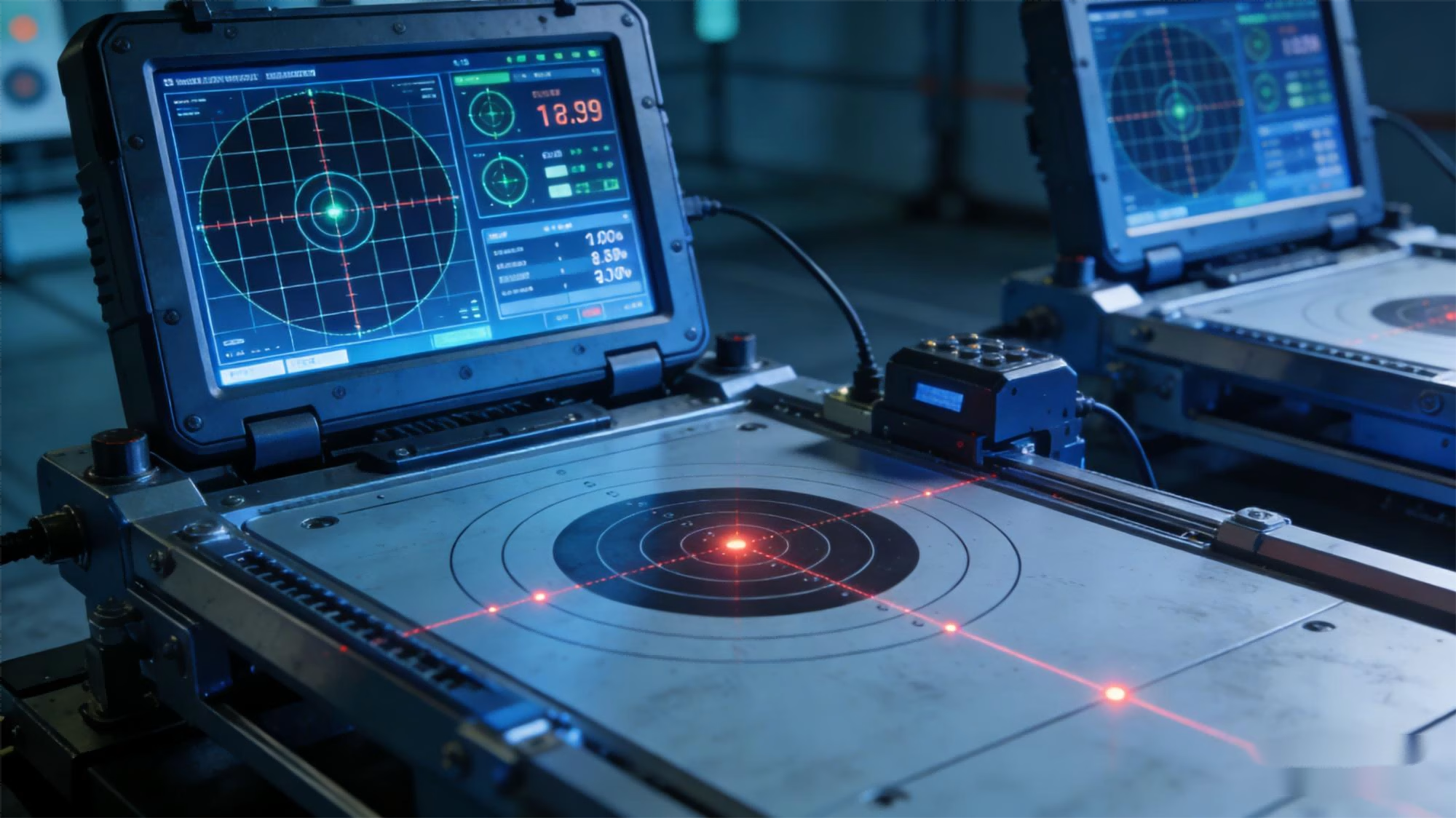
LOMAH (Location of Miss and Hit), also known as the "Impact Point Positioning System", is a high-precision target reporting system developed by Rizhao Junhe Jiuzhou. The system is based on acoustic sensing and multi-source data fusion, combined with intelligent algorithms to achieve full aperture and full missile speed compatibility. Its working principle can be decomposed into three stages: signal acquisition, data processing, and result output, while integrating technical solutions adapted to special scenarios.
一、 Core system composition
Target End | LOMAH TARGET target plate, acoustic sensor array, projectile impact sensor, environmental sensor (temperature/pressure/wind) | Collect projectile shock waves, penetration signals, and environmental parameters to support oblique projectile/motion target recognition
Firer End | FPE (Shooting Point Equipment), Shooter Display | Real time display of impact point, ammunition distribution, hit/miss information, supporting real-time correction
Communication link | Wired/wireless transmission module | Implement low latency data exchange between target end, shooting end, and control center
二、 Workflow (detailed explanation in stages)
1.Signal acquisition: Full scene projectile signal capture
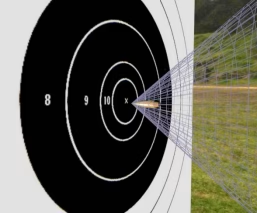
-Acoustic sensing core: The ballistic shock waves generated by the flight of projectiles (especially supersonic projectiles) are synchronously captured by multiple sets of acoustic sensors around the target, along with the shock waves generated by the impact on the target plate; The sensor array is installed according to the preset layout to ensure coverage of the target area and the surrounding off target detection range, and the trajectory of the projectile is located through "time difference (TDOA)".
Multi sensor fusion:
- Oblique projectile: By using the spatial distribution and angle compensation algorithm of the sensor array, the positioning error caused by non perpendicular incidence is corrected to ensure accurate calculation of the impact point of the oblique projectile.
- Motion target: The target is equipped with a built-in displacement sensor and dynamic compensation module, which synchronizes the position of the target in real time. Combined with the timing matching of the projectile signal, it achieves high-precision target reporting in a moving state.
- Full caliber/full velocity compatibility: The sensor's dynamic range covers the shock wave intensity of subsonic (such as some air guns) to supersonic (such as rifles and heavy machine guns) projectiles, and the algorithm automatically adapts to the signal characteristics of different caliber projectiles without the need for manual mode switching.
- Environmental calibration: Temperature/pressure/wind sensors collect real-time data, correct sound velocity propagation errors, and ensure positioning accuracy in complex environments.
2.Data processing: algorithm driven precise positioning
- Signal preprocessing: Filter environmental noise (such as wind and background sounds), extract effective shock waves/shock signals, and mark the timestamps when the signals arrive at each sensor.
- Impact point calculation: Based on the TDOA algorithm, the precise coordinates (X/Y axis) of the projectile on the target surface are calculated by combining the arrival time difference of signals from multiple sensors and the geometric model of the target; For penetrating projectiles, synchronously record the position of the bullet hole and the depth of penetration.
Special scenario adaptation:
- Oblique projectile: Introducing a three-dimensional spatial angle calculation model to correct the impact of incident angle on positioning and ensure coordinate accuracy when non perpendicular incidence occurs.
- Motion target: Combining the trajectory data of the target body, compensating for the timing of the projectile signal to achieve real-time positioning under the dual dynamics of "target motion+projectile motion".
- Data verification: Cross validate acoustic signals and impact sensor data, eliminate outliers, and improve the reliability of results.
- Result output: Real time feedback and data retention
- Real time target reporting: The shooting end monitor displays the impact point, number of hits, and off target direction/distance in real-time, supporting shooters to quickly adjust aiming parameters.
- Data recording and analysis: The control center automatically stores the parameters of each projectile (coordinates, projectile velocity, incident angle, environmental conditions), generates training reports, analyzes the distribution of projectile groups, calculates hit rates, and supports training review and optimization.
- Remote control: remotely configure target modes (static/motion), adjust target accuracy, and set training subjects (such as precision shooting and application shooting) through MCS.
三、 Key technological advantages and principle support
1.Principle of full weapon adaptation: The sensor has a wide dynamic range (covering low-energy projectiles to high-power heavy machine gun projectiles), and the algorithm does not rely on preset caliber/velocity values. Through adaptive matching of signal characteristics, it breaks free from the limitations of traditional targets on weapon types.
2.High precision guarantee: Multi sensor array+TDOA algorithm+environmental calibration, achieving sub centimeter level positioning accuracy; Dynamic compensation of moving targets and correction of oblique projectile angles, further expanding the applicable scenarios.
3.Low latency design: signal acquisition processing output full chain optimization, ensuring target reporting results are fed back within milliseconds to meet the needs of rapid shooting training.
四、Core differences from traditional targets
Traditional paper targets/ordinary electronic targets rely on visual recognition or a single sensor, which is easily affected by projectile velocity, aperture, and incident angle, and cannot accurately locate off target projectiles;
The Super LOMAH system achieves "full compatibility, high precision, and full scene" target reporting capability through acoustics, multi-sensor fusion, and intelligent algorithms, especially suitable for professional scenarios such as military police and shooting training.